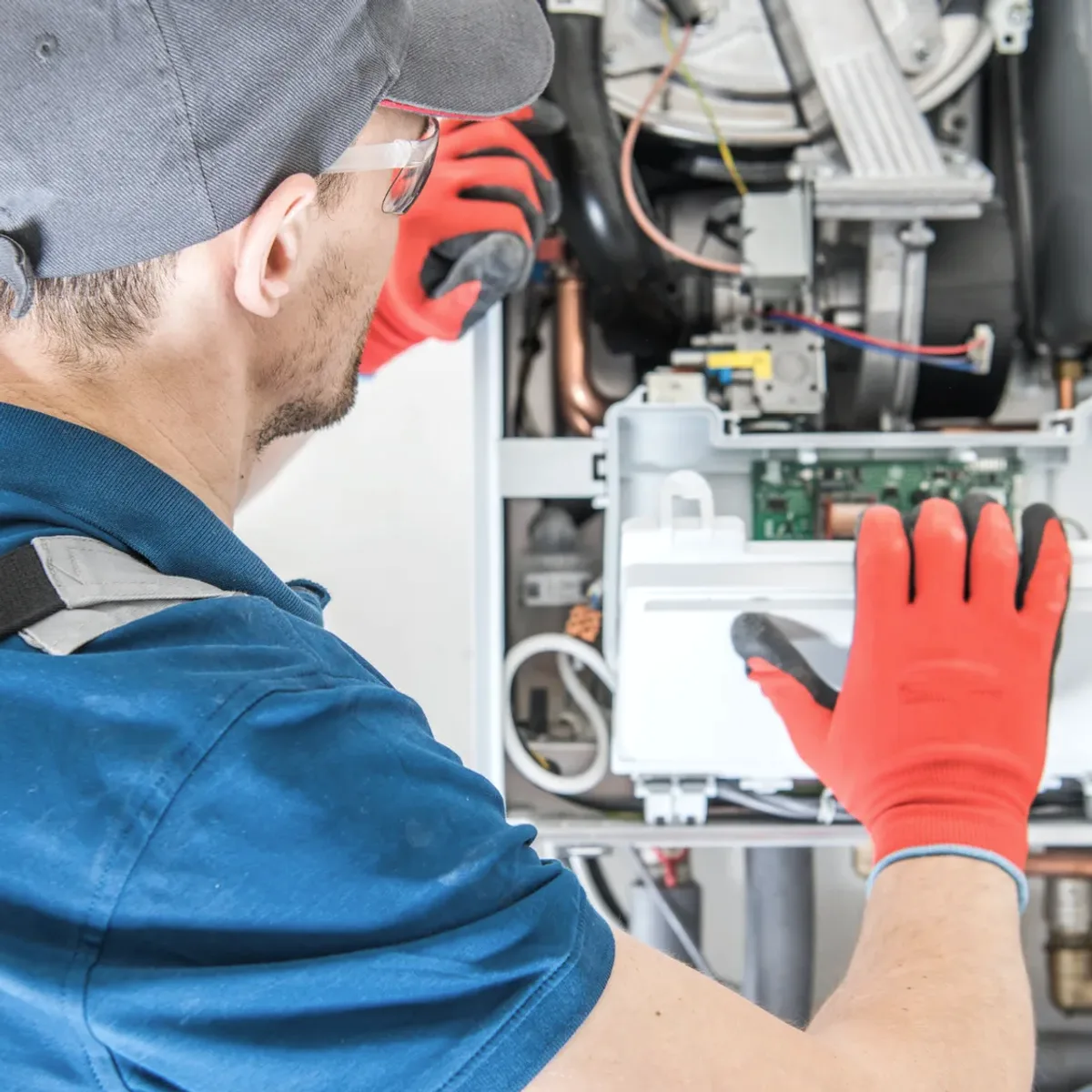
What information helps diagnose a boiler that is losing pressure or heating rooms unevenly?
Boiler work depends on the boiler design, fuel, and water-distribution system. A natural-draft cast-iron boiler serving radiators differs from a condensing boiler connected to in-floor loops, so the equipment and emitters need to be identified before diagnosis or replacement planning. The request can describe cold zones, leaks, pressure changes, or operating faults. Inspection findings distinguish ignition, circulator, expansion, venting, and control concerns, while maintenance follows the model instructions and observed condition.
Record the boiler model and fuel, the affected radiators or loops, any control display, and when pressure or heat changes occur. A qualified assessment may inspect for leaks, compare pressure and temperature readings with equipment requirements, and evaluate ignition, circulator, expansion, and venting components. These observations help distinguish a localized fault from a distribution or boiler-condition issue before repair or replacement is considered.
Ignition, circulator, expansion-tank, pressure, and venting fault diagnosis.
Natural-draft cast-iron and condensing boiler replacement considerations.
Fuel-specific maintenance guided by manufacturer instructions and inspection.
Assessment and Scope
Questions for the Proposed Work
01
Distinguish ignition faults from circulation and pressure problems
A boiler that will not fire may have an ignition, fuel-supply, control, or venting problem, while cold radiators or in-floor zones may point toward circulation or distribution. Pressure loss and a leaking relief valve need investigation for the cause rather than repeated adjustment. Inspection of the circulator, expansion tank, controls, and water-side condition helps locate the fault. The boiler's fuel and design determine which diagnostic checks apply.
02
Match replacement design to fuel and heat emitters
A natural-draft cast-iron boiler serving radiators has different operating and venting characteristics from a condensing boiler serving low-temperature in-floor loops. Replacement planning should consider fuel availability at the property, venting route, distribution temperatures, controls, and the connected emitters. Condensing equipment must be matched to system conditions and its installation requirements. These details affect the proposed scope and prevent treating all hydronic systems as interchangeable.
03
Keep maintenance specific to the boiler and inspection findings
Maintenance requirements differ between boiler models and fuel types, so manufacturer instructions and inspection results should determine the work. A gas, propane, or oil appliance may require attention to combustion and venting components, while water-side checks depend on the system's condition. Flushing is not an automatic step; evidence of a water-quality or circulation concern and the equipment instructions should guide whether it is appropriate. Maintenance is distinct from repairing a confirmed fault.
Compare the next step
Bring fuel-use records, occupancy changes, and the heating schedule to the assessment. Ask which findings connect increased consumption to boiler operation, distribution, or controls and which assumptions support an improvement estimate. If a new boiler is proposed, compare its intended operating conditions with the existing emitters instead of treating its published efficiency as a household savings guarantee.
Leave fuel, combustion, electrical, and pressure-system work to a qualified contractor. Do not adjust safety devices or repeatedly add water to a system with an unexplained leak or pressure loss.